Glucosamine, MSM and devil’s claw: how Joint Glide’s joint actives work
Updated August 2026 · reviewed by the Joint Glide Research Team. We are an independent information resource, not a medical provider, and this article is educational rather than medical advice.
Glucosamine, MSM and devil’s claw are three of the most recognizable names in joint nutrition, and they show up together in a lot of formulas — including Joint Glide — for a reason. Each covers a different job: glucosamine is a cartilage building block, MSM supplies sulfur the body uses in connective tissue, and devil’s claw is a botanical with a long tradition of use for joint comfort. This guide explains each in plain language, adds sensible dosing context, and shows how they fit together.
Three joint actives, and what each one does.
- Glucosamine
- A natural component of cartilage — the cushioning tissue in your joints — and one of the most used joint nutrients.
- MSM
- A sulfur-containing compound; sulfur is a raw material the body uses across connective tissue.
- Devil’s claw
- A South African root with a long tradition of use for joint and musculoskeletal comfort.
- Why combine them
- Together they cover cartilage building blocks and traditional comfort in a single daily serving.
- In Joint Glide
- 500 mg devil’s claw, 300 mg MSM and 200 mg glucosamine per two-capsule serving, plus pine bark and minerals.
To understand why these three are paired so often, it helps to start with the joint itself. Read on for the plain-language mechanism, then see how Joint Glide combines them with pine bark extract and a mineral base.
First, a quick look at the joint
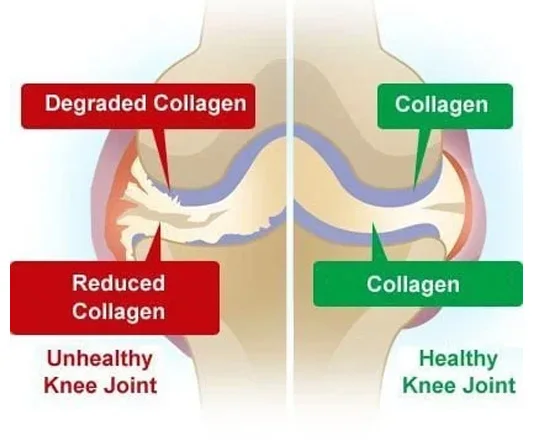
A joint is where two bones meet. The ends are capped with smooth cartilage, the space is lubricated by synovial fluid, and the whole structure is held together by connective tissue and moved by muscles. Cartilage is largely water plus a matrix of collagen and other compounds — and glucosamine is one of the natural building blocks of that matrix. Everyday wear and oxidative stress can gradually leave the tissue less resilient, which is where a supportive routine, including nutrition, comes in.

Glucosamine: a cartilage building block
Glucosamine is an amino sugar produced naturally in the body and a component of the cartilage that cushions your joints. In supplements it usually appears as glucosamine sulfate or glucosamine hydrochloride, both derived to provide the glucosamine molecule. Because it is a natural part of cartilage, it is a logical foundation for a joint formula and is taken daily and consistently. What it has not done is settle the argument: the NIH-funded GAIT trial reported no significant benefit over placebo in its full knee osteoarthritis group (Clegg et al., New England Journal of Medicine, 2006), and a network meta-analysis in the BMJ judged the effect on joint pain too small to be clinically meaningful (Wandel et al., BMJ, 2010).
Joint Glide uses glucosamine hydrochloride at 200 mg per serving. Hydrochloride is a concentrated form, and here it works alongside MSM and the botanicals rather than as a stand-alone high dose.
MSM: sulfur for connective tissue
MSM (methylsulfonylmethane) is a naturally occurring compound and a source of sulfur. Sulfur is a building material the body uses throughout connective tissue, which is why MSM is such a common partner to glucosamine in joint blends. It is water-soluble and generally well tolerated, and Joint Glide includes it at 300 mg per serving. The published trials are smaller than the glucosamine literature but read more favourably, including a pilot trial in knee osteoarthritis (Kim et al., Osteoarthritis and Cartilage, 2006) and a randomised, placebo-controlled study in adults with mild knee pain (Toguchi et al., Nutrients, 2023) — both at one to three grams a day, well above the amount in most combination capsules.

See the full Joint Glide label →
Devil’s claw: the traditional comfort botanical
Devil’s claw (Harpagophytum procumbens) is a plant native to southern Africa, named for the small hooks on its fruit. Its root has a long tradition of use for joint and musculoskeletal comfort, and it is often standardized to a compound called harpagoside. It is the headline botanical in Joint Glide at a generous 500 mg of organic root per serving, joined by 150 mg of white willow bark, another traditional comfort botanical. Devil’s claw has the most directly relevant human research of the three actives here, though reviewers describe the trials as encouraging rather than conclusive (Chrubasik, Rheumatology, 2002) (Brien et al., Journal of Alternative and Complementary Medicine, 2006). White willow bark, for its part, has been tested mainly in low back pain rather than in joints (Chrubasik et al., American Journal of Medicine, 2000).
| Active | What it is | Per Joint Glide serving |
|---|---|---|
| Devil’s claw root | Traditional comfort botanical | 500 mg |
| MSM | Sulfur compound | 300 mg |
| Glucosamine HCl | Cartilage building block | 200 mg |
| Pine bark extract | Antioxidant (95% OPC) | 150 mg |
| White willow bark | Traditional comfort botanical | 150 mg |
| Black pepper extract | Absorption support (piperine) | 10 mg |
Why combine them instead of taking one?
Each of these ingredients covers a different job, so combining them lets a single serving address several angles at once: cartilage building blocks from glucosamine and MSM, traditional comfort from devil’s claw and white willow bark, antioxidant support from pine bark, and a mineral base from zinc, copper and magnesium. That is the logic behind a blend — convenience plus breadth — and it is why you rarely see these sold as isolated single ingredients in a comfort-focused product.

All three, in one capsule serving
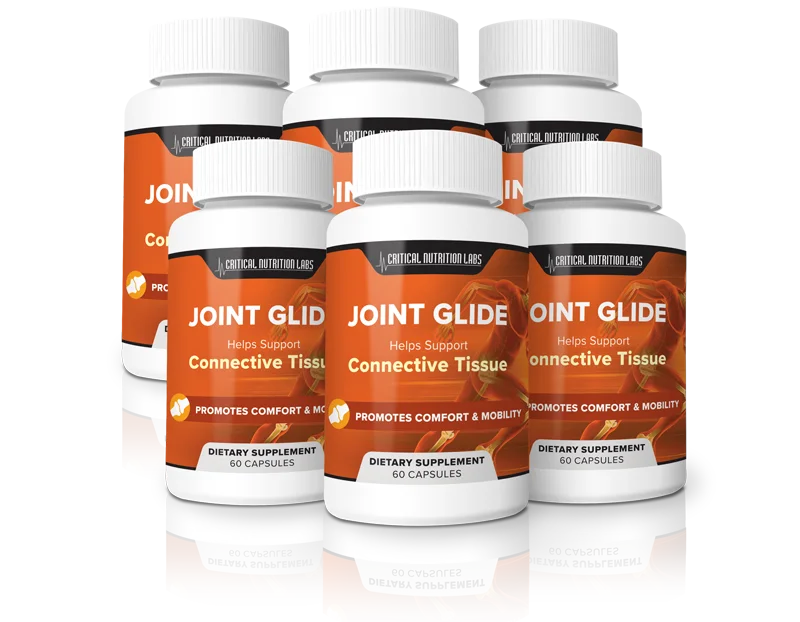
Joint Glide puts devil’s claw, MSM and glucosamine together with pine bark and a mineral base. The six-bottle bundle is the best value at $49 per bottle, with free U.S. shipping and a 60-day guarantee.
Order Joint Glide — from $49/bottleSensible dosing and what to look for
Amounts vary between products, and more is not automatically better. The table below gives general context for how these ingredients are usually presented on a label.
| Ingredient | What to look for on a label |
|---|---|
| Glucosamine | A named form (HCl or sulfate) with the milligrams stated, not buried in a blend. |
| MSM | A clear milligram amount; MSM is often dosed in the hundreds of milligrams and up. |
| Devil’s claw | Whether it is standardized (to harpagoside) and the amount of root or extract. |
| Pine bark | A standardization such as 95% proanthocyanidins for a consistent extract. |
| Overall | Lab testing, a GMP facility, and a guarantee so you can trial it without risk. |
Joint Glide lists each ingredient with its amount and standardization on the Supplement Facts panel, and for the wider picture of joint nutrients see our guide to the best supplements for joint health. Capsules are only ever part of the picture, though — the daily habits that matter most are set out in our practical guide to relieving joint pain naturally, and a broad review of joint supplements in the British Journal of Sports Medicine found that most produce small effects at best (Liu et al., British Journal of Sports Medicine, 2018).

Cautions and common sense
These ingredients are widely used, but a few points are worth knowing. Some glucosamine is derived from shellfish, which matters if you have a shellfish allergy. Devil’s claw and white willow bark are worth discussing with your doctor if you take blood thinners, are sensitive to aspirin or salicylates, or have stomach concerns. And as with any supplement, none of this is a treatment for a medical condition — it is a support to movement, a healthy weight and a balanced diet. If you are pregnant, nursing, under 18 or on medication, check with your physician first.

Frequently asked questions
What do glucosamine, MSM and devil’s claw do for joints?
Glucosamine is a natural building block of joint cartilage; MSM supplies sulfur that the body uses across connective tissue; and devil’s claw is a botanical with a long tradition of use for joint and musculoskeletal comfort. Together they cover cartilage building blocks and traditional comfort in one formula.
Is glucosamine hydrochloride as good as glucosamine sulfate?
Both are common forms of glucosamine used in joint supplements. Hydrochloride is more concentrated per gram, while sulfate has been used in many studies. Joint Glide uses glucosamine hydrochloride at 200 mg per serving as part of a broader blend.
How much devil’s claw is a typical serving?
Devil’s claw is usually standardized to its harpagoside content, and formulas commonly deliver a few hundred milligrams of root or extract per day. Joint Glide provides 500 mg of organic devil’s claw root per two-capsule serving.
Can I take glucosamine, MSM and devil’s claw together?
Yes — they are frequently combined in a single joint formula, which is why blends like Joint Glide put them in one serving. Combining them is about convenience and covering several angles at once, rather than any one ingredient replacing another.
Are there any cautions with these ingredients?
Shellfish-derived glucosamine can matter for people with a shellfish allergy, and devil’s claw and white willow bark are worth discussing if you take blood thinners, are sensitive to aspirin, or have stomach concerns. Always check with your doctor before starting a new supplement.
How long until glucosamine and MSM might help?
These nutrients build gradually, so most people take them consistently for several weeks to a few months before judging the result. A daily routine and a money-back guarantee make that trial period easier.
Try Joint Glide risk-free for 60 days →
Joint Glide is a dietary supplement, not a treatment for any medical condition. These statements have not been evaluated by the Food and Drug Administration. This product is not intended to diagnose, treat, cure or prevent any disease. Always consult a qualified healthcare professional about your individual needs.
References & further reading
- Examine.com. Glucosamine — evidence-based summary. examine.com/supplements/glucosamine
- Examine.com. MSM (Methylsulfonylmethane). examine.com/supplements/msm
- National Center for Complementary and Integrative Health (NCCIH). Devil’s Claw. nccih.nih.gov/health/devils-claw
- National Center for Complementary and Integrative Health (NCCIH). Willow Bark. nccih.nih.gov/health/willow-bark
- Clegg DO, Reda DJ, Harris CL, et al. Glucosamine, chondroitin sulfate, and the two in combination for painful knee osteoarthritis. New England Journal of Medicine, 2006. PMID 16495392
- Wandel S, Jüni P, Tendal B, et al. Effects of glucosamine, chondroitin, or placebo in patients with osteoarthritis of hip or knee: network meta-analysis. BMJ, 2010. PMID 20847017
- Kim LS, Axelrod LJ, Howard P, et al. Efficacy of methylsulfonylmethane (MSM) in osteoarthritis pain of the knee: a pilot clinical trial. Osteoarthritis and Cartilage, 2006. PMID 16309928
- Toguchi A, Noguchi N, Kanno T, Yamada A. Methylsulfonylmethane Improves Knee Quality of Life in Participants with Mild Knee Pain: A Randomized, Double-Blind, Placebo-Controlled Trial. Nutrients, 2023. PMID 37447322
- Chrubasik S. Effectiveness of devil’s claw for osteoarthritis. Rheumatology (Oxford), 2002. PMID 12422011
- Brien S, Lewith GT, McGregor G. Devil’s Claw (Harpagophytum procumbens) as a treatment for osteoarthritis: a review of efficacy and safety. Journal of Alternative and Complementary Medicine, 2006. PMID 17212570
- Chrubasik S, Eisenberg E, Balan E, et al. Treatment of low back pain exacerbations with willow bark extract: a randomized double-blind study. American Journal of Medicine, 2000. PMID 10936472
- Liu X, Machado GC, Eyles JP, et al. Dietary supplements for treating osteoarthritis: a systematic review and meta-analysis. British Journal of Sports Medicine, 2018. PMID 29018060
These references describe the ingredients in general terms and do not constitute evidence that any product treats, cures or prevents any condition.
Keep reading: how to relieve joint pain naturally · the best supplements for joint health · back to the Joint Glide blog · homepage.